Available for Purchase.
"*" indicates required fields
This submission is an inquiry of availability and details but does not guarantee a sale. Thank you for your understanding.

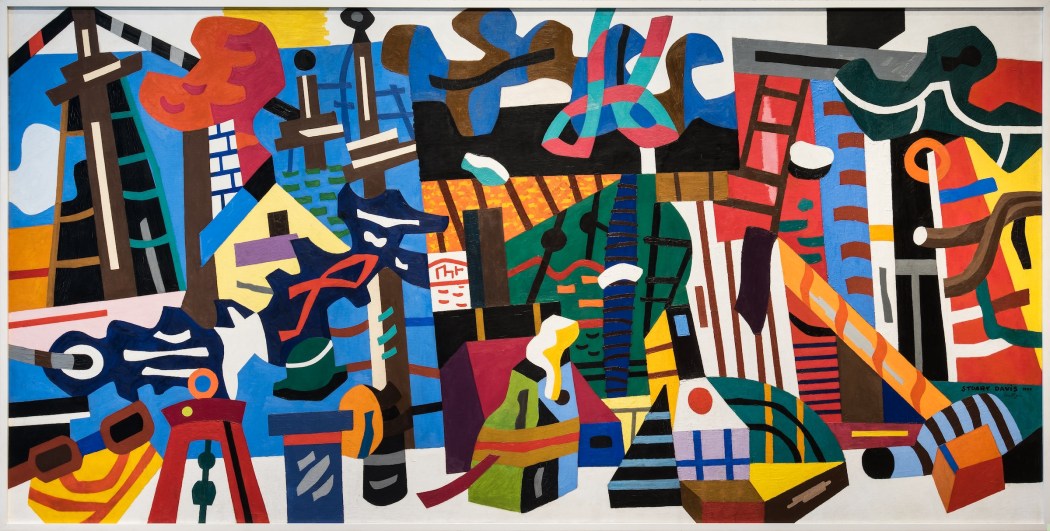
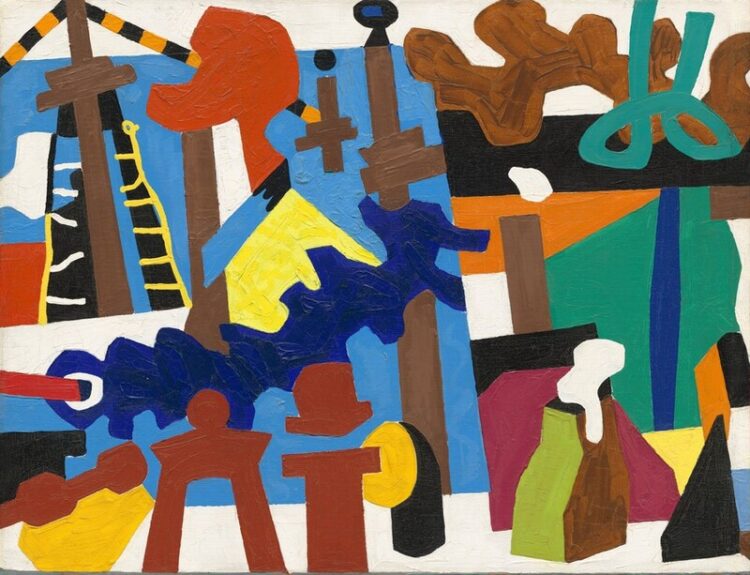
Stuart Davis, Swing Landscape
In 1907, under the auspices of the Kingdom of Prussia, Hungarian archeologist and adventurer Aurel Stein made his way to the caves in Dunhuang, China (near the Silk Route between the Taklamakan and Gobi deserts). A secret room had been discovered some years earlier by the Taoist monk, Wang Yuanlu, caretaker of the site. Stein negotiated the removal of hundreds of pieces from the wall murals, as well as scrolls and other objects. He loaded the collection on a camel caravan and eventually it was deposited into the state’s collection in Berlin.
THE CAVE COLLECTION
On a visit to Berlin a couple of decades ago, I trekked out to suburban Dahlem for the sole purpose of seeing this collection in the Ethnologisches Museum. While walking through the exhibition, I felt a distinct mixture of exhilaration and guilt.
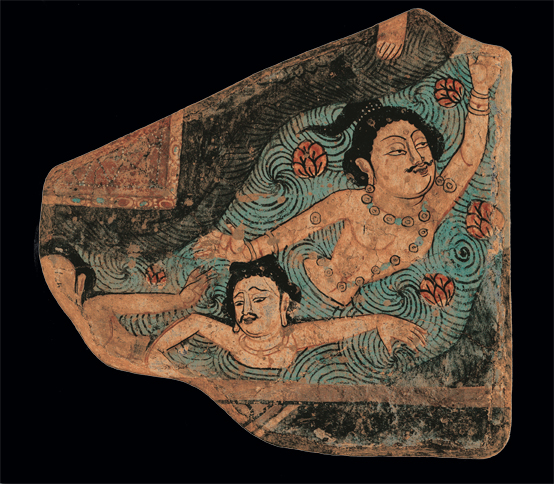
The Berlin location allowed for greater accessibility. It’s hard to describe how visually arresting this collection was to my Western eyes. Moreover, it cracked open a fascinating world about which I knew virtually nothing. Most importantly, I am certain I never would have seen it had it remained in a remote part of China. At the same time, I felt associative culpability over an imperial nation’s wanton pillaging of another country’s culture.
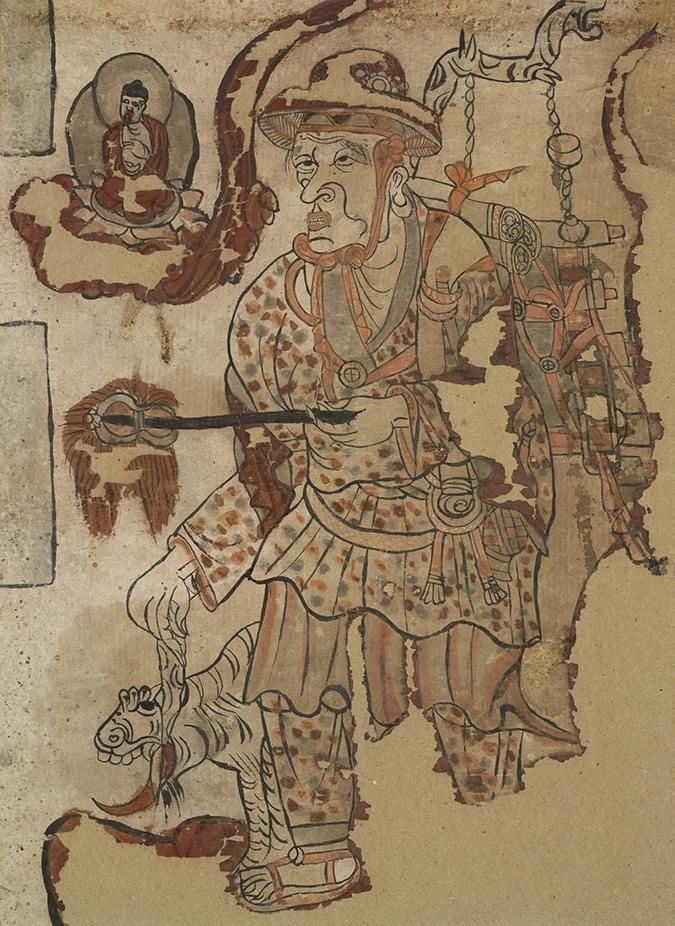
Some time later, a perhaps more troubling consideration arose. When it was removed from its specific site and deposited into an institution, the work lost its place-bound identity—the concomitant spacial, social, religious, ideological, historical/cultural/physical elements that attached to it specifically because of its cave environment.
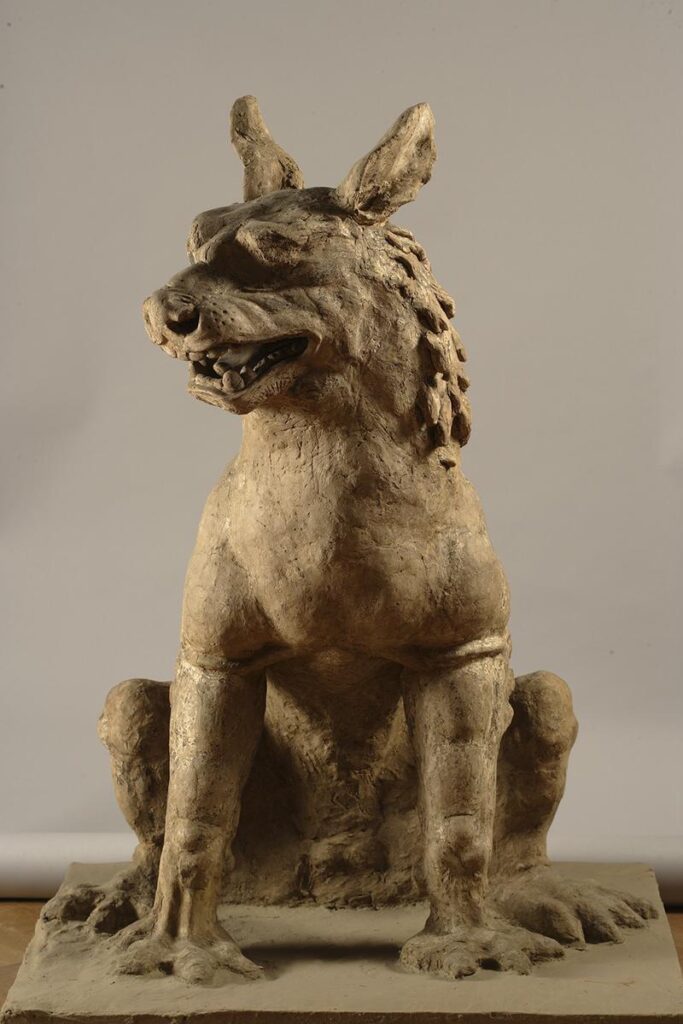
Contained in this collection is a whole backstory of the long journey undertaken by Buddhist communities from India to China in the early centuries CE. Viewing this work as aesthetic objects on a museum, I was missing the the full documentary context a layover at the edge of the desert where Buddhists made temples out of caves.
A STUART DAVIS MURAL
In 1938 the WPA commissioned Stuart Davis to paint a mural for the Williamsburg Houses in Brooklyn, NY, one of the first federally-funded housing projects for low income tenants. Davis’ piece was to be part of an ambitious project of 14 public murals and sculptures, intended to enhance the everyday experiences of residents through their interaction with art.
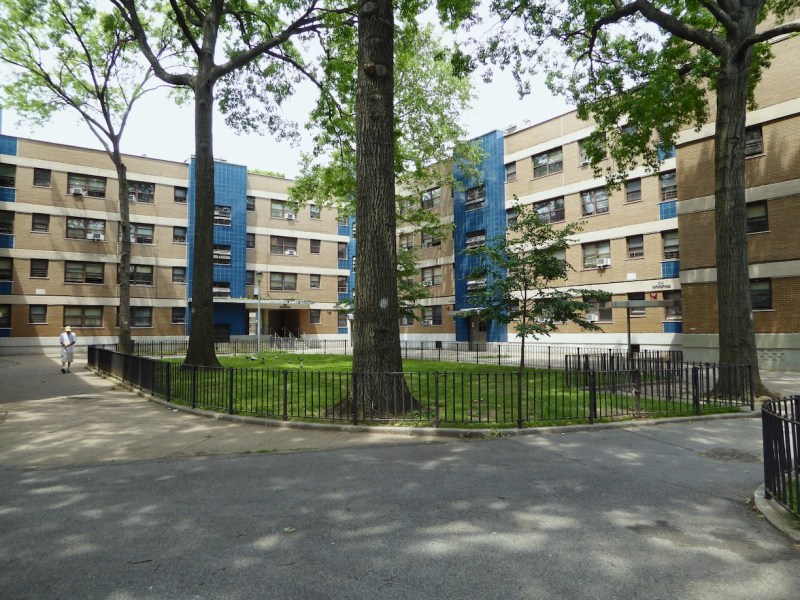
Like no other American era before, The New Deal embraced culture as a cornerstone of democracy. Art wasn’t considered a luxury for the elite, but a source of inspiration, beauty, and civic pride for all citizens. Through the FAP (Federal Art Project, the largest of visual arts project under the WPA ) a vast amount of art was made accessible to the public, predominantly through murals on community schools, post offices, hospitals, and even prisons. This work has had a wide legacy, influencing the governmental role in supporting art and subsequent generations of artists to come.
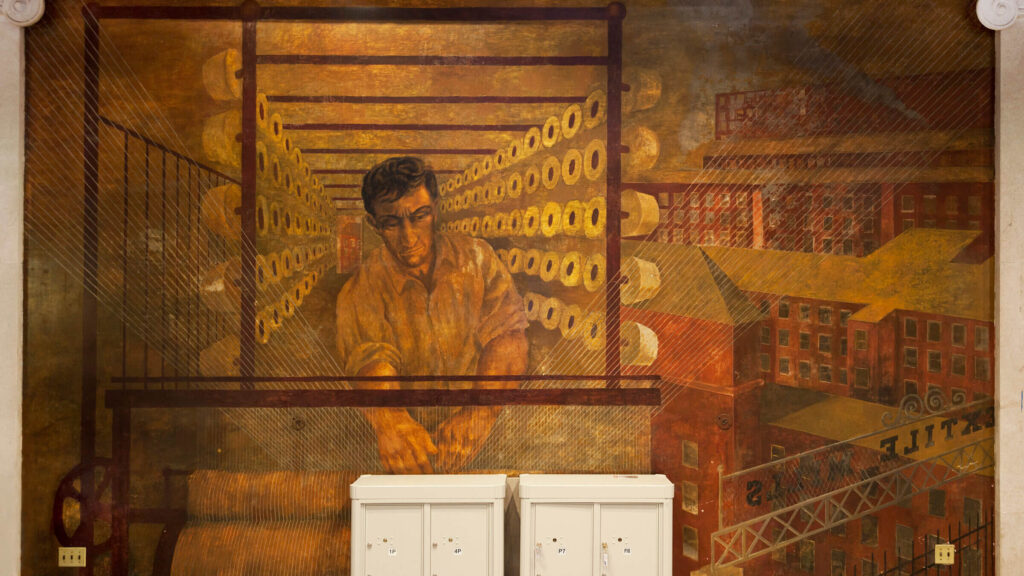
As they centered on aspects of American life, FAP murals were executed predominantly in the representational style. Therefore, Davis’ non-representational image would have been unusual. Even so, the mural division, headed by abstract artist Burgoyne Diller, welcomed abstraction and for many reasons Davis was chosen as one of the muralists.
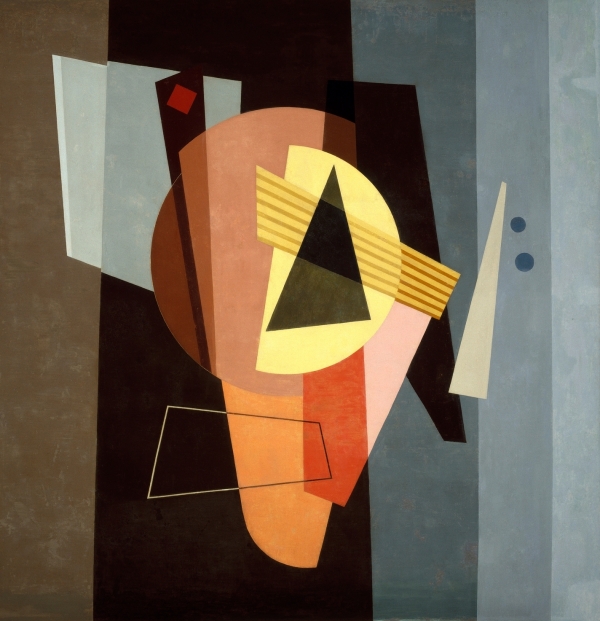
Ultimately, the submitted Swing Landscape was rejected by the committee, most likely as Jennifer McCormas , curator at the Eskenazi Museum, suggests: “(its) overwhelming vibrancy may have been deemed incompatible with the architecture of the Williamsburg Houses.”
In 1942 the painting, already stretched onto bars, was acquired by Indiana University, where it occupied several spots on campus until it was permanently installed in the Eskenazi Museum. Now widely-regarded as one of the 20th century’s most important American paintings, Swing Landscape has been saved from obscurity, although bereft of its original social context and isolated from major art centers. (Additionally, it’s in fragile condition, so rarely leaves the museum.)
TRUE IDENTITY
Granted, sometimes the only accessibility we have to cultural artifacts is in a museum. However, in this rapidly globalizing world, it’s worth recognizing that works like the Dunhuang collection and Davis mural, originally made in a specific time and meant for a specific purpose/place, become homogenized and commodified as a portable aesthetic object in museums—moved around and lingered over often briefly. We can appreciate the aesthetic quality of the object, but we are not really experiencing its true identity.
THE RABBIT HOLE
International Dunhuang Project: A history and visual catalog of the Dunhuang caves.
“A Secret Library, Digitally Excavated” : Jacob Mikanowski’s essay on discovery of Dunhuang caves in The New Yorker.
Living New Deal: THE database of FAP projects
More on Swing Landscape—Jennifer McComas informative essay; Whitney exhibition
Miron Kwon, “One Place or Another”—thesis discussing site specific work and locational identity

I’ve been to the Mogao Caves and have a book from there that has inspired my work over the years. I’ll show it to you.